
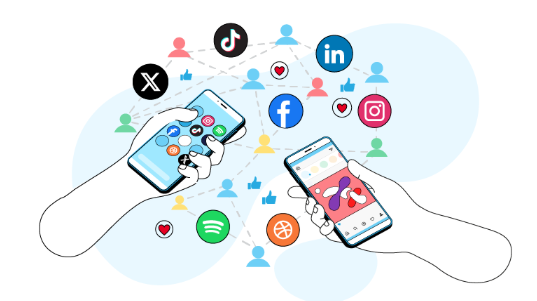
Social media has become a major part of everyday life, especially for young people. One of the biggest advantages of social media is that it helps people stay connected with friends and family, even if they live far away. Platforms like Instagram and TikTok allow users to share photos, videos, and messages instantly. Social media can also help people meet others who share similar interests, build communities, and learn about different cultures and perspectives from around the world.
Another benefit of social media access is the ability to learn and discover new information quickly. Many people use social media to follow news accounts, educational pages, or creators who teach skills like art, science, or technology. Students can also use social media to collaborate on school projects, ask questions, and find helpful resources. When used responsibly, social media can be a powerful tool for creativity, self-expression, and learning.
However, there are also several downsides to social media access. Spending too much time online can become distracting and may take away from schoolwork, hobbies, or time spent with family and friends in person. Social media can also expose users to misinformation, unrealistic lifestyles, or negative comments. Some people may feel pressure to compare themselves to others based on posts they see online, which can sometimes affect confidence and mood.
In conclusion, social media has both important benefits and serious drawbacks. It can help people communicate, learn, and express themselves, but it can also lead to distraction and social pressure if used too much. The key is learning how to use social media in a balanced and responsible way. By setting limits and thinking carefully about what we share and consume online, people can enjoy the advantages of social media while reducing its negative effects.
Leave a Reply